
Water has always been treated as a renewable certainty, flowing through rivers, stored in aquifers, and cycling through rainfall. But scientists are now warning that the global water system is reaching a dangerous tipping point.
In early 2026, researchers at the United Nations University Institute for Water, Environment and Health (UNU-INWEH) warned that the world has entered an era of “global water bankruptcy.” The phrase describes a situation where humanity is withdrawing freshwater faster than natural systems can replenish it, effectively running an ecological deficit on the planet’s most fundamental resource. (UNU-INWEH report)
In this edition of People, Planet & Purpose, we explore what global water bankruptcy means, why freshwater systems are reaching their limits, and what this turning point reveals about the relationship between climate change, governance, and the future of water security.
From Water Stress to Water Bankruptcy

For decades, water scarcity has been discussed as a regional issue affecting drought-prone countries or rapidly growing cities. But researchers now argue that the problem has evolved into something much larger.
Experts describe three stages in the deterioration of freshwater systems:
- Water stress – demand begins approaching available supply
- Water crisis – shortages become frequent and disruptive
- Water bankruptcy – ecosystems can no longer replenish what societies extract
According to the United Nations University Institute for Water, Environment and Health, many regions are now approaching this final stage as aquifers decline and river systems become increasingly unstable. (UNU-INWEH analysis)
International coverage of the report described the moment as a structural shift in how the world must think about freshwater availability. (The Guardian, Washington Post, New Scientist)
Why the Crisis is Accelerating?
The move toward water bankruptcy is being driven by three powerful forces.
Rising demand
Agriculture remains the largest consumer of freshwater globally, accounting for around 70% of total withdrawals worldwide. As populations grow and food systems expand, pressure on water resources continues to increase. (Population Connection analysis)
Climate disruption
Climate change is altering rainfall patterns, increasing evaporation, and reducing snowpacks that feed major rivers. These changes are making water availability less predictable and reducing the natural replenishment of freshwater systems. (Washington Post climate coverage)
Groundwater over-extraction
Many countries rely heavily on underground aquifers that accumulated over thousands of years. These reserves are increasingly being depleted faster than they can recharge, pushing ecosystems closer to collapse. (UNU-INWEH report)
Together, these forces are widening the gap between water supply and water demand across the planet.
The Climate – Water Connection

The water crisis is inseparable from the climate crisis.
Energy systems, particularly fossil fuel extraction and thermal power generation, consume significant volumes of water. At the same time, climate change intensifies droughts, heatwaves, and rainfall variability, further destabilising freshwater systems.
Climate researchers warn that water scarcity may become one of the most immediate and visible consequences of global warming. (350.org analysis)
What this means for India ?

For India, the implications of global water bankruptcy are particularly serious.
The country relies heavily on groundwater for both agriculture and urban water supply. Yet groundwater levels across many regions are declining rapidly due to over-extraction and erratic rainfall patterns.
Experts warn that several Indian cities are approaching conditions that resemble hydrological bankruptcy, where groundwater withdrawal far exceeds natural recharge rates.
(India Today report, Observer Research Foundation analysis)
Urban expansion, inefficient irrigation practices, and fragmented water governance are compounding the challenge.
A Governance Challenge, not just a Resource Crisis
Water bankruptcy is not only about climate or geography, but it is also about how societies manage water.
Many economies continue to treat freshwater as an unlimited resource. Subsidised groundwater pumping, inefficient irrigation systems, and weak regulatory frameworks allow extraction to continue without long-term sustainability.
As experts note, without systemic reforms in water governance and infrastructure, the imbalance between supply and demand will only deepen. (IEF World overview of water bankruptcy)
What can be done?
Responding to Water Bankruptcy
If the world has entered an era of water bankruptcy, the response must move beyond short-term crisis management. Researchers argue that governments now need strategies for “bankruptcy management”, living within ecological limits while protecting the natural systems that produce freshwater. (UNU-INWEH report)
Protection
First, protecting natural water infrastructure, wetlands, rivers, aquifers, and glaciers is essential, as continued ecosystem damage reduces the planet’s ability to store and replenish freshwater. (UNU-INWEH report)
Preservation
Second, rebalancing water demand with ecological limits is critical. Many regions allocate more water than ecosystems can sustainably supply, requiring reforms in agriculture, industry, and urban water use. (SDG Knowledge Hub summary)
Finally, experts emphasise the need for better monitoring and adaptive governance, using data, modelling, and early warning systems to manage water resources before ecological thresholds are crossed. (UNU-INWEH report)
Addressing water bankruptcy ultimately means recognising that freshwater systems underpin climate stability, food security, and economic resilience, and must be governed accordingly.
Emerging Solutions
Encouragingly, Solutions are already emerging across sectors.
Large corporations are beginning to adopt water-positive strategies. Companies like Microsoft have committed to becoming water positive by 2030, while PepsiCo and Coca-Cola Company invest heavily in watershed restoration and water replenishment projects in high-risk regions.
Startups are rethinking how water is used and produced. Companies such as Watergen create drinking water from air using atmospheric generation technology, while Fasal uses AI-powered precision irrigation to help farmers reduce water consumption while maintaining crop yields.
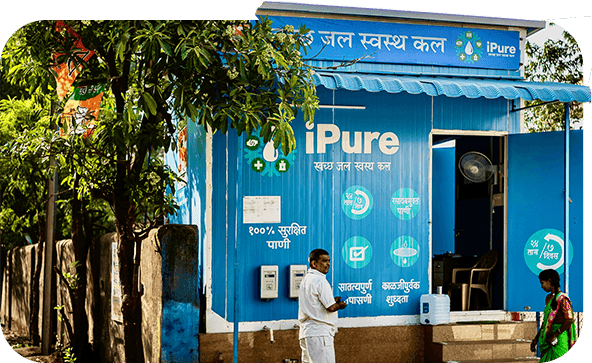
And Non-profits are working directly with communities to improve access and resilience. Non-profits like Naandi Water build community-owned water purification plants that deliver safe drinking water to rural and peri-urban communities while strengthening local water governance.
Together, these examples show that while the challenge of water bankruptcy is immense, solutions are already being built, from global corporations and innovative startups to grassroots organisations working closest to the problem.
Hottest Grants this Week
AndPurpose Grants

The Building Power Resource Center Fellowship supports recent master’s graduates interested in climate policy and community-driven decarbonization initiatives. Fellows work with community organizations and government partners on research, campaigns, and project implementation.
Deadline: 27 March 2026
The Visiting PhD Fellowship Programme at UNU-WIDER offers doctoral students a three-month research opportunity in Helsinki to work on development economics topics. Fellows receive a €2,070 monthly stipend, travel support, and research collaboration opportunities
Deadline: 31 March 2026

Closing notes
Water has always been the quiet foundation of our economies, cities, and food systems. Yet the idea of global water bankruptcy reminds us that even the most fundamental resources have limits.
The challenge ahead is not simply to conserve water; it is to rethink how we value, govern, and protect it. Because safeguarding freshwater systems will shape everything from food security and climate resilience to public health and economic stability.
With Love and Purpose,
Team AndPurpose