
We’re Producing Less Waste – So Why Does It Feel Like More?
“Recycling rates are rising, sustainability commitments are growing – and yet, the waste around us isn’t disappearing” (a reality reflected in India’s latest waste management data from the Central Pollution Control Board).
Across India, the narrative is changing. Companies are reporting higher recycling numbers, new policies are enforcing accountability, and the circular economy is becoming a mainstream goal.
So why does the problem still feel bigger than ever?
The answer lies in the gap between what we measure and what actually changes. What looks like progress on paper doesn’t always translate into impact on the ground.
In this edition, we explore that disconnect – drawing on data, on-ground realities, and conversations emerging from platforms like the AndPurpose Forums, from recycling limits to startups and local systems, this is a closer look at what it will take to move from managing waste to reducing it.
On Ground Reality vs Policy
At the AndPurpose Forums Bengaluru,Wilma Rodrigues, Co-Founder of Saahas Zero Waste, highlighted a critical gap.

“We’ve had Waste Management rules in place for over 25 years. The issue is not the lack of solutions – it is the lack of implementation.”
Zero-waste models, decentralised systems, and segregation frameworks already exist – and work.
The challenge lies in adoption. Participation remains inconsistent, whether it’s segregation at source or reducing waste at an individual level. Implementation continues to fall short of intent.
The Illusion of Progress
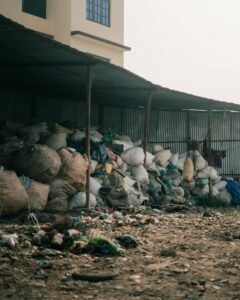
India is recycling more waste than ever before – so why does it feel like we’re surrounded by more of it?
Most metrics are output-focused – how much waste is processed – while ignoring input metrics, like how much waste is generated.
In India, this gap is clear. While cities report better collection efficiency, per capita waste continues to rise (A Global Snapshot of Solid Waste Management to 2050 by World Bank). Waste today reflects lifestyle changes—convenience, speed, and packaging-heavy consumption.
Compliance is often mistaken for impact. Under EPR frameworks, “processed” waste may include downcycling or energy recovery – methods that delay, not eliminate waste.
At the same time, waste has become more visible. Aggregation points and landfills concentrate it, while displacement shifts it elsewhere in the system.
Progress is real – but uneven.
By the Numbers: India’s Waste Reality
The scale of the problem becomes clearer when you look at the numbers.
India generates over 65 million tonnes of municipal solid waste annually.
This is projected to cross 160 million tonnes by 2030 as urbanisation accelerates.
On a daily basis:
Cities produce over 1.5 lakh tonnes of waste
Only 70–75% is collected (the full breakdown tells a more complex story – see CPCB data)
Less than 30% is scientifically treated
The rest ends up in landfills, open dumps, or leaks into the environment.
Plastic waste adds another layer of complexity.
India produces 9–10 million tonnes of plastic waste every year
Packaging contributes nearly 60%
While recycling rates are often estimated at 50–60%, the reality of recycling looks different on the ground.
This figure depends heavily on the informal sector and includes downcycling, not true recycling.
Core Issue:
Waste generation is growing faster than management capacity.
When Efficiency Masks Expansion

Higher recycling rates signal efficiency – not reduction.
Meanwhile, consumption is rising. E-commerce, food delivery, and single-use packaging are reshaping waste volumes.
The result is a system improving, and being overwhelmed at the same time.
🍂 Did you know?
India generates over 25,000 tonnes of plastic waste every day, much of it coming from low-value, single-use packaging (based on CPCB data).
Hyderabad: A perfect example of Growth vs Capacity
This contradiction becomes particularly visible in Hyderabad.
The city currently generates close to 8,500–9,000 metric tonnes of waste every single day, a sharp increase from roughly 6,000–6,500 MT/day just a few years ago (the pace of increase is clearer in city-level data). Rapid urban expansion, rising incomes, and consumption-heavy lifestyles have significantly increased per capita waste generation.
At the same time, infrastructure is improving – integrated systems, waste-to-energy plants, and e-waste processing capacity.
Yet pressure remains. Landfills are nearing capacity, and waste spikes continue to strain systems.
Hyderabad reflects a larger truth:
Systems are improving – but demand is rising faster.
The conversation doesn’t end here. We’re bringing these questions to the Hyderabad Forum – be part of building what comes next.
Explore the 4th edition of AndPurpose Forums, Hyderabad 2026
The Startup Surge - Solving the Wrong End?
Waste is becoming organised, trackable, and measurable.
Startups are building across traceability, compliance, and recycling – bringing structure to a historically fragmented system. Platforms like Recykal are digitising waste flows, enabling brands to track materials across the value chain and meet EPR compliance through a connected network of producers, recyclers, and aggregators.
At the same time, EcoReco is addressing one of the fastest-growing waste streams – e-waste by building tech-enabled recycling systems that ensure safe disposal, resource recovery, and regulatory compliance in a largely unorganised sector.
This is necessary progress. Waste is becoming visible – even valuable.
But most innovation happens after waste is created.
The system is improving downstream, while upstream waste continues to grow. We are building smarter systems to manage a problem still expanding at its source.
The result is a system that feels more organised and scalable – yet remains reactive.
The Real Question
The circular economy is often positioned as the solution – a shift from produce–consume–dispose to a closed loop where materials are continuously reused.
In reality, much of India’s system operates on downcycling, where materials lose quality over time (as highlighted by TERI and CSE). This means materials eventually exit the loop and become waste again. Circularity, in its current form, helps slow the problem – but does not eliminate it.
And that brings us to a more fundamental shift.
The issue is not a lack of waste management systems. It is the continued focus on managing waste rather than reducing its creation. As long as production prioritises convenience and scale, and consumption continues to rise, waste will outpace even the most efficient systems.
Which is why, despite visible progress, the problem still feels larger than ever.
India’s waste ecosystem is becoming more efficient, more structured, and more innovative. But at the same time, the scale of waste being generated continues to grow even faster.
That is the paradox:
“Progress is real, but so is the pressure.
Until one slows down, the other will never feel enough.”
AndPurpose Grants
Hottest Grants this Week
The EIT Food Grow Programme supports women-led agrifood startups through a 6-month accelerator combining mentorship, training, and funding. It helps early-stage founders scale sustainably, gain investor access, and build strong business foundations.
Deadline: 26 April 2026
The AICS Sudan Grant provides up to €1.2 million to NGOs delivering essential services like health, food, WASH, and education. It focuses on supporting displaced populations and strengthening resilience in crisis-affected communities.
Deadline: 04 May 2026
Closing Note
Progress alone won’t solve the waste crisis – direction matters just as much as speed. As long as we continue to produce more than we reduce, efficiency will only delay the inevitable.
The shift we need is upstream, from managing waste to rethinking how it’s created. Because the real measure of progress isn’t how well we handle waste, but how little we generate.
The future of sustainability begins not at disposal, but at design.
With Love & Purpose
Team AndPurpose