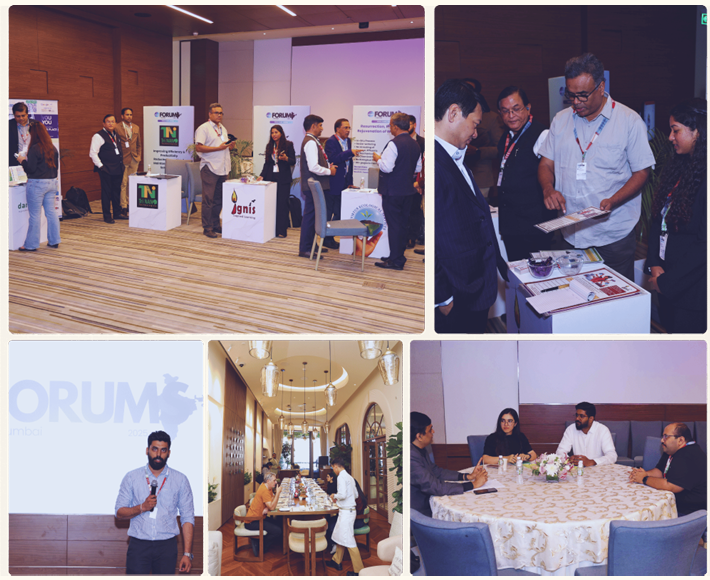
 On December 10, 2025, 150+ leaders walked into the Jio World Convention Centre with a shared question: How do we move from declaring ambition to delivering impact?
The AndPurpose Forum | Mumbai 2025 was designed to answer that question not with speeches alone, but through honest dialogue, cross-sector collaboration, and the kind of trust-building that turns ideas into action.
Two Keynotes, Four Panel Discussions, an Investor Roundtable, A CSR Workshop, A Private Lunch, Six Purpose Pitches
Hosted at one of India’s leading venues – the Jio World Convention Centre, a LEED Platinum certified building, the Forum’s venue embodied the very principles we gathered to advance.
From energy-efficient operations powered by renewable energy and 222 EV charging stations to rainwater harvesting, zero-waste-to-landfill systems, and natural lighting illuminating 75% of occupied spaces, the Centre demonstrated that sustainability at scale is not aspirational; it is operational.
The upcycled lanyards by Bunko Junko, and the intention setting with Art Partners, Inner Canvas Wellbeing, the message was deliberate: convening with partners that walk the talk, reinforcing our commitment to aligning intent with integrity.
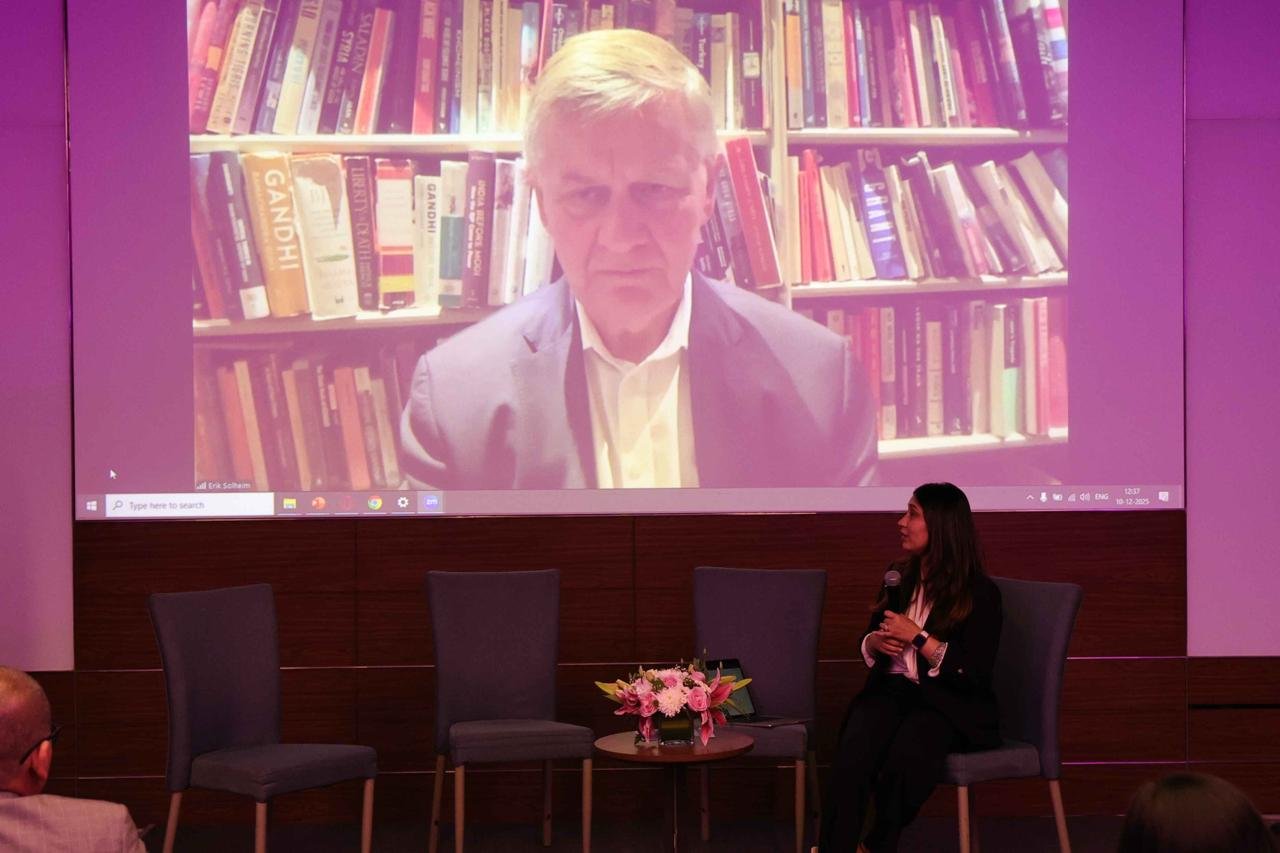
Erik Solheim, former Norwegian Minister of Climate & Environment & Former Executive Director, UNEP
Erik Solheim, former Executive Director of the UN Environment Programme, brought a global lens to India’s climate journey. Fresh from visiting the world’s largest integrated solar-wind-hydro facility in Andhra Pradesh, a 6.5 GW installation larger than the entire power grids of Nepal or Nigeria, he positioned India as a leader driving the global green transition.
“"The green transition is no longer led by the West, it is being driven by the Global South, by countries like China and India."”
Erik Solheim
His address underscored a powerful truth: India’s clean-energy progress is no longer a future promise. It is happening now, at scale.
“Growth, if it does not improve the everyday lives of citizens, is only arithmetic. Purposeful growth is when progress is felt on the ground in dignity, access, and trust.”
Drawing from his work governing one of India’s fastest-growing urban centres, he spoke about citizen centric governance, digital transparency, and embedding sustainability into everyday administration. His message was clear: India’s next phase of development will be decided in its cities, not just through infrastructure, but through systems that serve people with accountability and care.
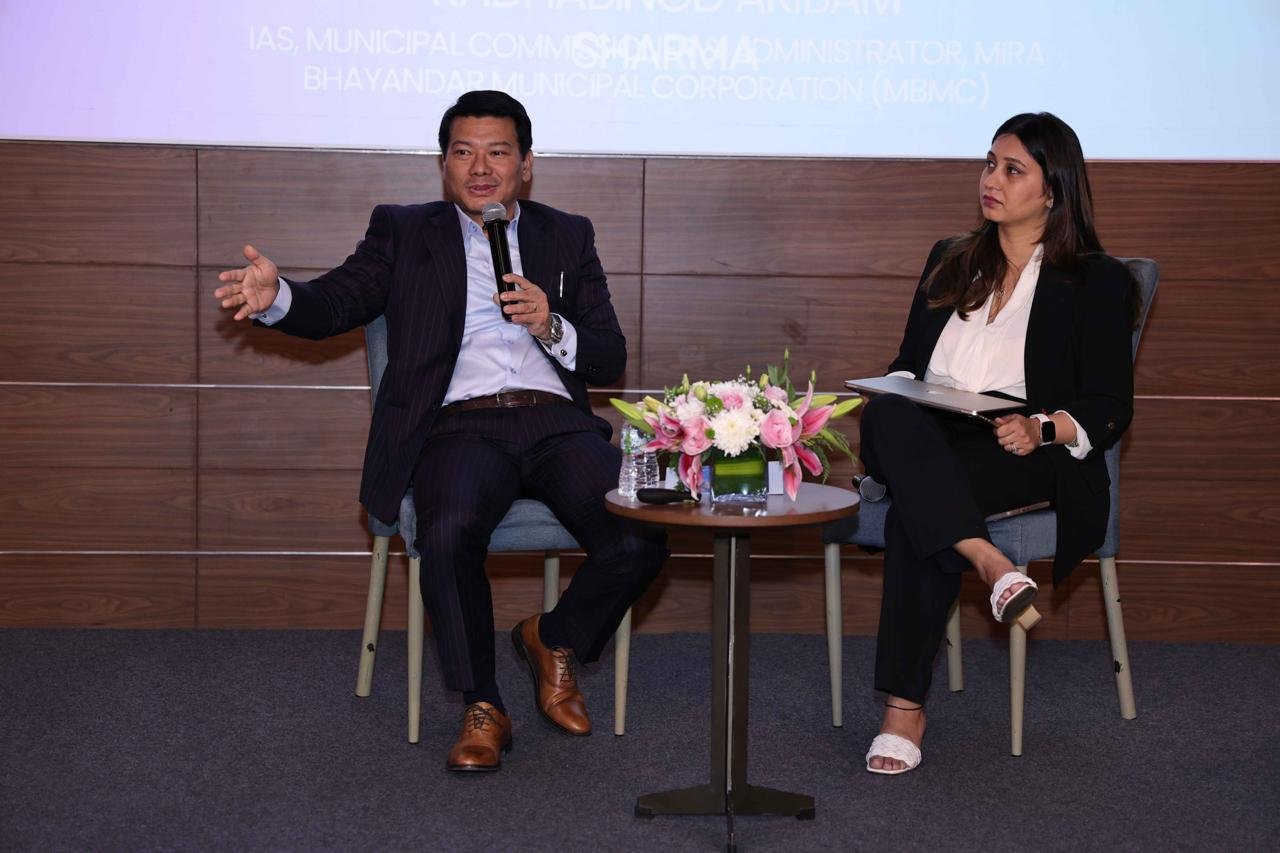
Radhabinod Aribam Sharma, IAS, Commissioner Mira Bhayandar Municipal Corporation (MBMC) & Kamna Hazrati, Founder, AndPurpose
4 Core Conversations: From Sector Talk to Systems Thinking
The Forum centered on four intersecting themes, explored through sessions designed to move past rhetoric and into real friction points.
India’s Clean-Energy Pivot: A Post-COP Dialogue
The discussion made one thing clear: execution, not innovation, is the bottleneck. “Renewables are now cheaper than fossil fuels globally,”
While renewable deployment has accelerated, the constraint now lies in energy storage, grid resilience, and supply-chain autonomy. Battery Energy Storage Systems (BESS) were spotlighted as the critical missing link. alongside the need for workforce reskilling and a diversified energy mix tailored to India’s geography.
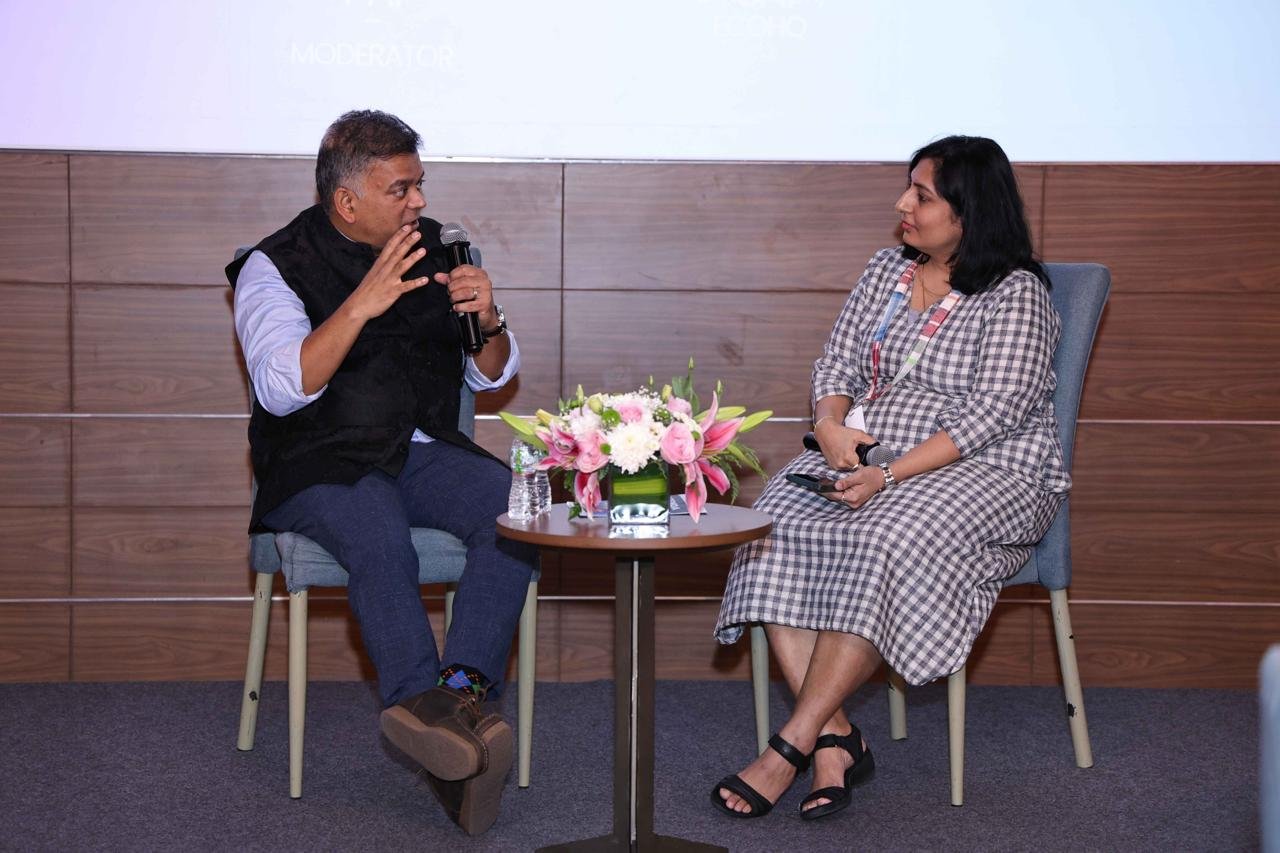
Madhav Pai, Director WRI India & Deepa Sai, Director EcoHQ
Sustainable Fashion
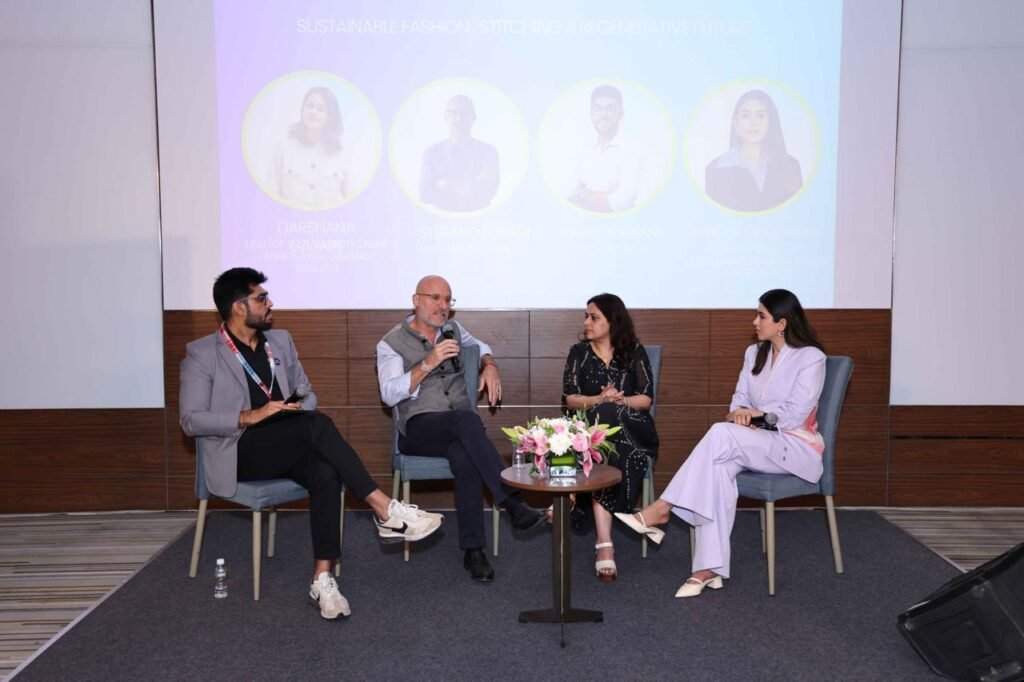 Rahul Nainani (Co-founder & CEO, ReCircle), Stefano Funari (Founder, I Was a Sari), Darshana Gajare (Head of Sustainability, Reliance Brands & Lakmé Fashion Week), moderated by Shreya Ghodawat (Founder, Sustainable Tea with Shreya)
The panel confronted a hard truth: India’s fashion consumption has been conditioned by fast fashion. Circularity, they argued, works only when it feels intuitive as an upgrade, not a sacrifice. Scaling too early, without behavioral alignment, risks eroding the very trust purpose-led brands are trying to build.
Climate Resilience: Built Bottom-Up
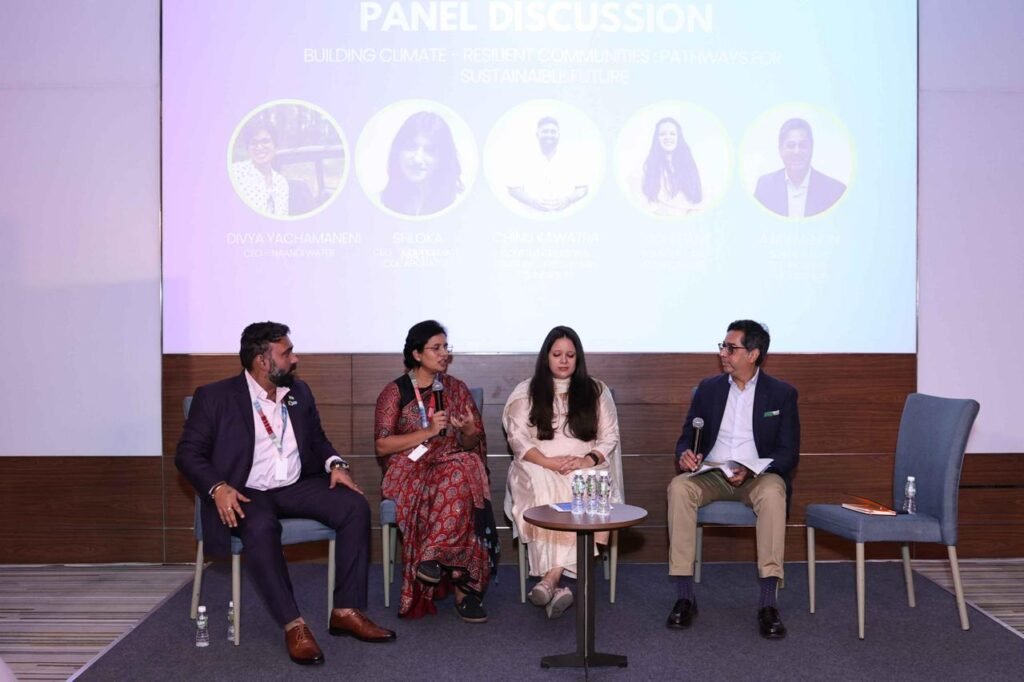 Chinu Kwatra (Founder, Khushiyaan Foundation), Divya Yachamaneni (CEO, Naandi Water), Nidhi Pant (Co-founder, S4S Technologies), Ajay Menon, Senior Practice Lead, TechnoServe India
The climate resilience discussion grounded the Forum in lived realities often missing from high-level climate narratives. Bringing together practitioners working across water access, food systems, livelihoods, and community development, the session shifted focus from abstract targets to everyday climate stress already shaping people’s lives.
Speakers drew from sustained on-the-ground experience to highlight how resilience is tested daily—through water scarcity, income volatility, food loss, and environmental degradation. The conversation deliberately moved away from one-size-fits-all frameworks, emphasising that resilience cannot be engineered solely through policy or technology.
Their shared insight was clear: climate resilience is built bottom-up, not top-down.
Sustainable Finance: Reimagining Mumbai as the Capital of Impact
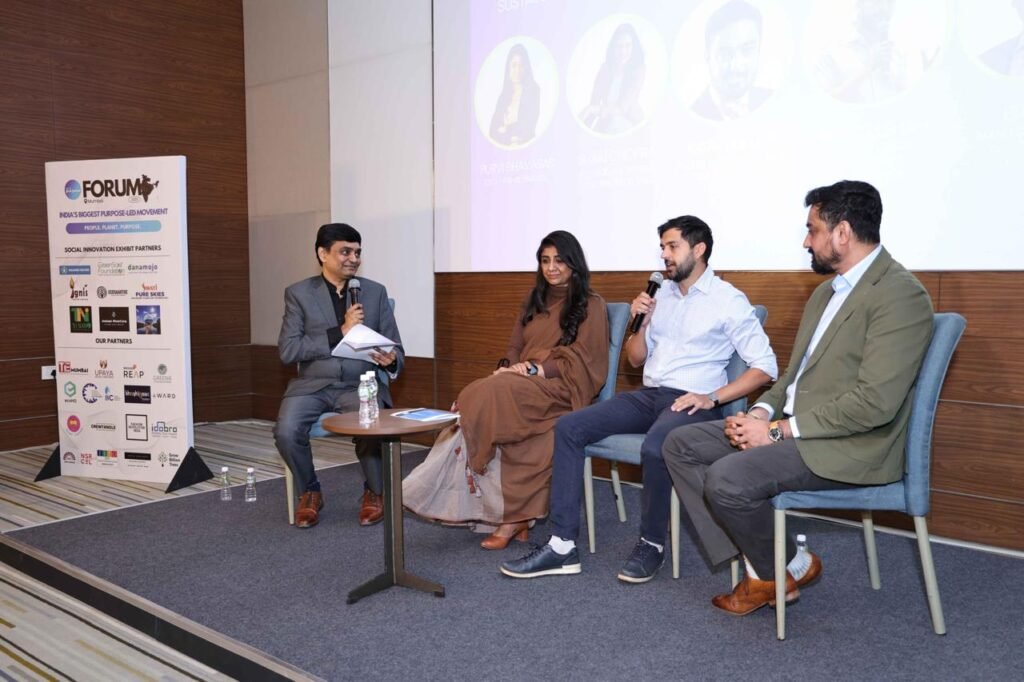 Purvi Bhavsar (MD, Pahal Financial Services), Aakash Shah (Partner, Peak Sustainability Ventures), and Karan Mehta (Venture Principal, Green Frontier Capital), moderated by Gaurav Shah (Founder & Managing Partner, Arete Ventures)
As India’s financial capital, Mumbai plays a defining role in how impact capital moves from intent to execution. This session brought investors and capital allocators together to address a central tension: why does climate and impact innovation struggle to scale, even when capital appears available? The conversation shifted quickly from fundraising to deployment. Panelists agreed that scale is limited less by capital and more by clarity on customers, unit economics, execution discipline, and readiness to absorb risk.
” "There are no failed projects, only unlearned founders"
Karan Mehta, Green Frontier Capital
Building on this, speakers emphasised that pilots fail to scale when learning cycles remain incomplete. Capital, when deployed without clarity, can amplify fragility rather than resilience. A recurring insight was the need to understand end users deeply, designing around real cash flows, repayment behaviour, and on-the-ground realities before seeking growth capital.
Action Formats: Designed for Doing
Across sectors, the most meaningful climate and social progress is coming from solutions that move beyond pilots and scale inside real systems, energy grids, supply chains, cities, and ecosystems.
What sets the Mumbai Forum apart was its deliberate shift from dialogue to action.
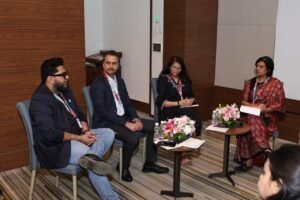
CSR Workshop
led by senior practitioners from DBS Bank, ASK Asset & Wealth Management, and HDB Financial Services, examined the intent action gap in real communities. Rather than just celebrating best practices, the conversation focused on behavioural adoption, course correction, and sustaining impact beyond funding cycles.
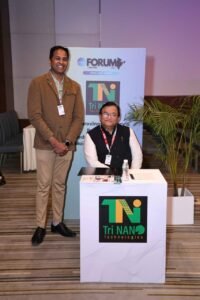
Social Innovation Exhibits
Offered a tangible view of solutions in motion. Participants engaged directly with models addressing climate resilience, environmental restoration, and last-mile livelihoods moving conversations from abstraction to practical understanding. The exhibit enabled discovery, deeper questioning, and early partnership conversations between implementers, funders, and ecosystem enablers.

Investor Roundtable
Hosted by Arete Ventures, and attended by investment firms like the Circulate Capital, Green Frontier Capital, Wavemaker Impact & more, enabled candid capital conversations assessing readiness, risk, and patient capital alignment without the performance of a public pitch.
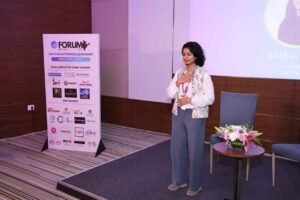
Art & Purpose
Inner Canvas, the Forum’s Art Partner, set a reflective tone through mindfulness and art based exercises that centered participants’ attention before the day’s discussions.
Purpose Pitch
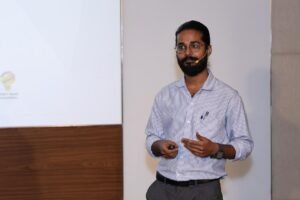
Spotlighted six mission driven organisations, working across climate resilience, circular materials, clean energy, and livelihoods. The session sparked direct engagement with aligned investors, moving quickly from presentation to partnership.

Private Networking Lunch
Intimate Networking Lunch at the NMACC Art Café, bringing together 70 leaders in a space designed for meaningful conversation, deeper connection, and collaborative reflection, underscoring the Forum’s belief that impact begins with presence.
What Moved Forward
The most tangible outcome of the Mumbai Forum was momentum rooted in clarity.
New cross-sector partnerships began taking shape between investors, implementers, CSR leaders, and founders, particularly around clean energy deployment, community-led resilience, and circular value chains. Founders gained clearer signals on scale readiness and capital expectations. Investors deepened their understanding of on-the-ground innovation.
Carrying the Conversation Forward
The AndPurpose Forum, Mumbai 2025, marked the third and final edition of our forum series this year. It was never designed to offer easy conclusions – it was designed to surface responsibility.
Across Delhi, Bengaluru, and Mumbai, one thing became clear: India does not suffer from a lack of ideas. What will define this decisive decade for climate action, inclusive growth, and systems change is how consistently we act on what we already know – and who is willing to take ownership in the process.
Mumbai reaffirmed a powerful truth: when governance, capital, enterprises, and communities come together with honesty and intent, momentum becomes possible.
Not overnight, but meaningfully. As we step into 2026, we carry these learnings forward – with deeper collaboration, patient institution-building, and purpose that translates into action.
Fewer buzzwords. Stronger systems. Rooms that reward depth.
As the year draws to a close, we wish you a restful holiday season – one filled with reflection, renewed energy, and clarity, guided by your own purpose.
The AndPurpose community comprises over 1,300 changemakers globally, united by a shared commitment to developing solutions that benefit both people and the planet.
To join future Forums & the global summit or learn more about our work, visit andpurpose.world
With Love & Purpose
AndPurpose